Case study 03
TS4TIC: Translational Simulation for Trauma-Informed Care.
Designing an open-access toolkit for trauma-informed care in Irish acute hospitals.
- Role
- Graphic Designer · Content Curator · Simulation Facilitator
- Timeline
- 2023 - 2024
- Location
- Dublin, Ireland
- Partners
- Trinity College Dublin · St James' Hospital · Health Research Board
At a glance
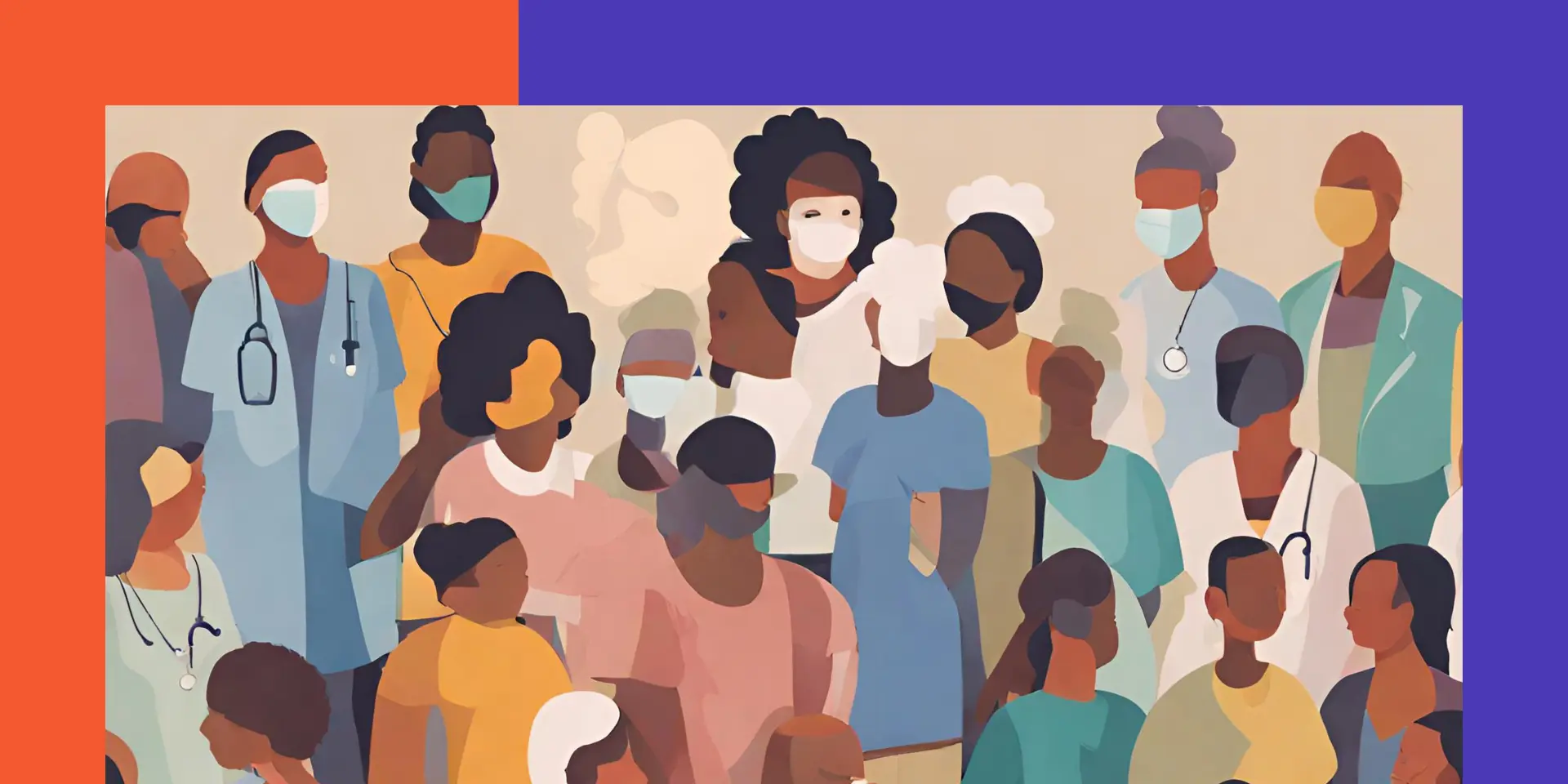
This research project asked a simple but important question: how do you make trauma-informed care visible, teachable and usable inside a busy Irish hospital system?
My role was to lead the graphic design of an open-access toolkit that could guide healthcare staff through a translational simulation approach to trauma-informed care, while also creating teaching aids to support learning in academia. Beyond the design work, I also supported the rollout of Cycle 2 simulations with emergency doctors, consultants, medical students, nursing staff and security guards at St James' Hospital, Dublin.
Why it mattered
The acute hospital context was central to the project.
TS4TIC was developed specifically for acute healthcare settings, with St James' Hospital's Emergency Department and Acute Medical Assessment Unit as a key site.
The hospital's Inclusion Health service already offered a person-centred, ACE-aware, trauma-informed model of integrated care for people experiencing homelessness and marginality, in partnership with the HSE and voluntary services.
A powerful setting for a toolkit designed to improve care quality, staff confidence and patient experience in high-pressure environments.
Design challenge
Practical, teachable, trustworthy.
The challenge was not simply to create something visually polished. It was to design a toolkit that could help a complex health system understand and apply trauma-informed care without overwhelming staff. It needed to be practical for healthcare teams, useful for quality improvement, and flexible enough to support simulation, reflection and teaching across disciplines.
It also had to handle a language challenge: in acute care, the word "trauma" is often associated with physical injury. The project therefore used the term psychological trauma to make the concept more accessible and relevant to staff.
My approach
A visual system, not just a document.
I began by breaking a complex clinical and educational concept into a structure that felt calm, clear and easy to navigate. The toolkit was designed to explain the key ideas behind translational simulation, trauma-informed care, quality improvement and co-production, while also signposting the structures, resources and processes needed to put the approach into practice.
I worked iteratively with the programme team as chapters were being written and finalised in parallel, moving quickly between information architecture, layout wireframes, visual hierarchy and content design. After each round of feedback from programme leads, clinicians and end users, I refined the structure, then populated it with visual assets, diagrams and graphic elements once the content was approved.
Shaped the visual language around three audiences
Clinicians
Under time pressure, needing clarity at a glance.
Educators
Needing adaptable teaching material across disciplines.
Stakeholders
Looking for a credible open-access resource they could trust.
The result was a toolkit designed to work in two settings at once: as a practical resource for healthcare settings, and as a teaching tool for academic learning.
Key design outputs
Open-access implementation toolkit.
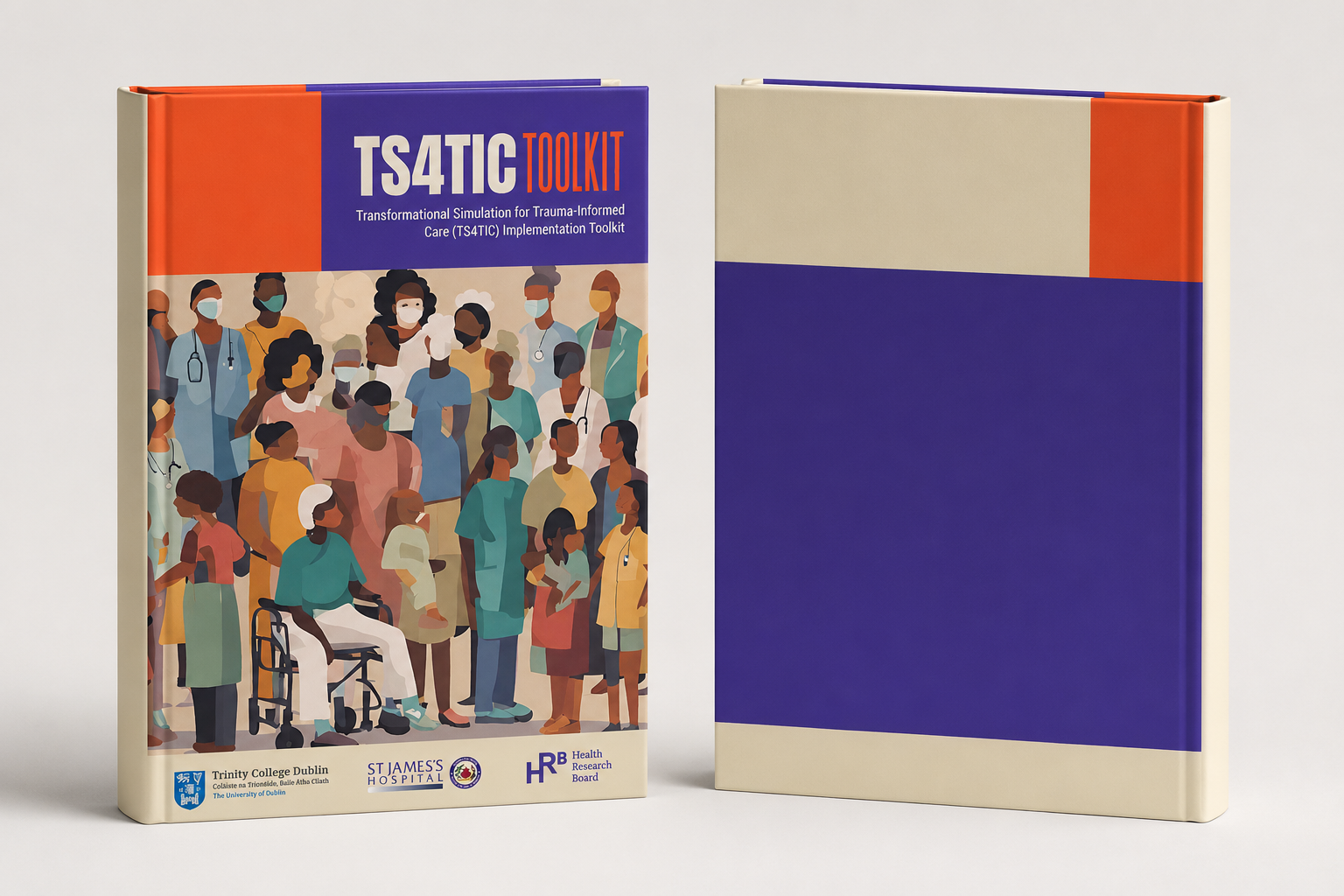
The main output was the TS4TIC toolkit itself: a 50-page open-access resource published in June 2024 by Trinity Centre for Global Health and St James' Hospital.
It was designed to guide healthcare teams through the planning, co-creation, simulation and reflection stages of trauma-informed care implementation in acute and community settings.
Teaching aids for academia
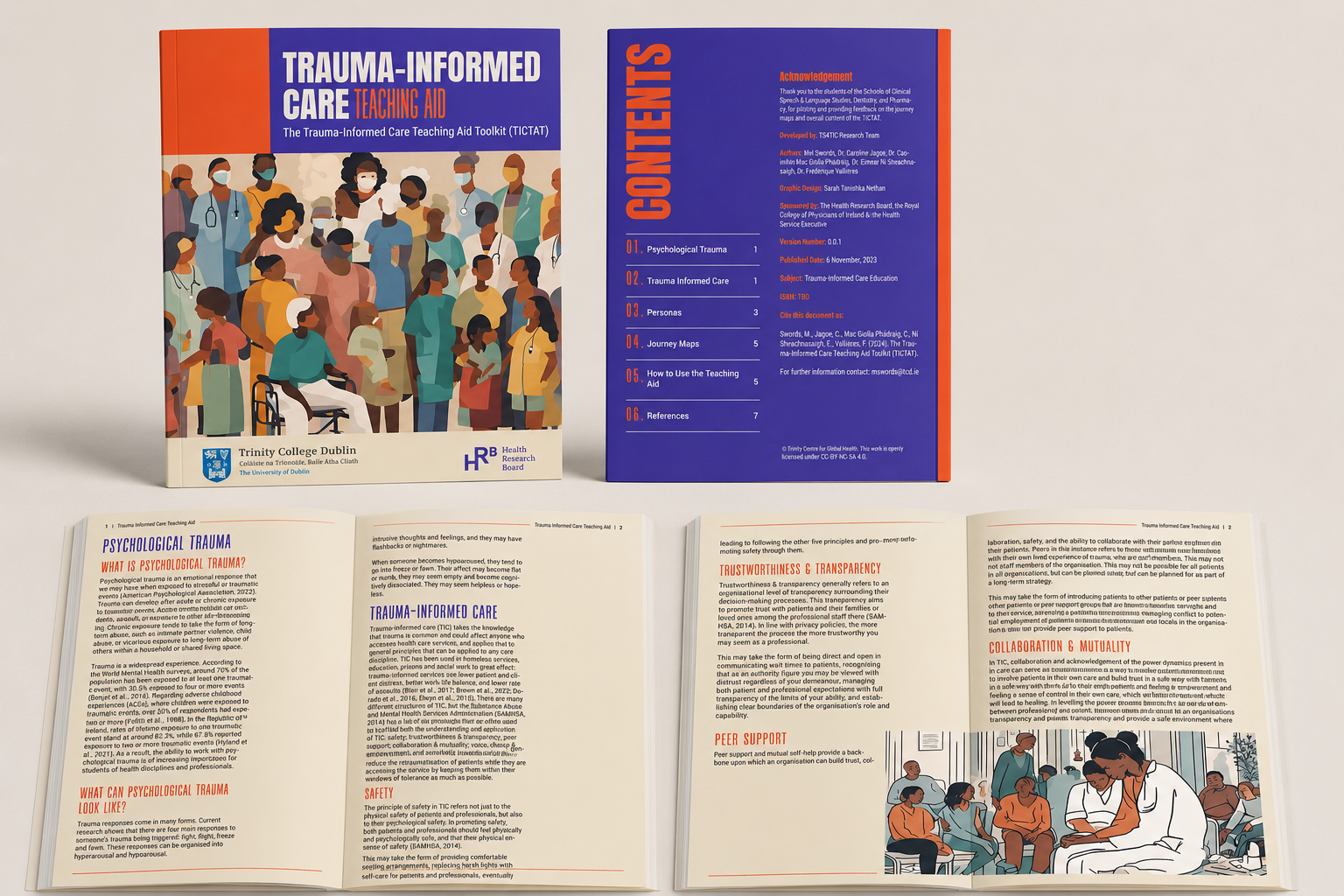
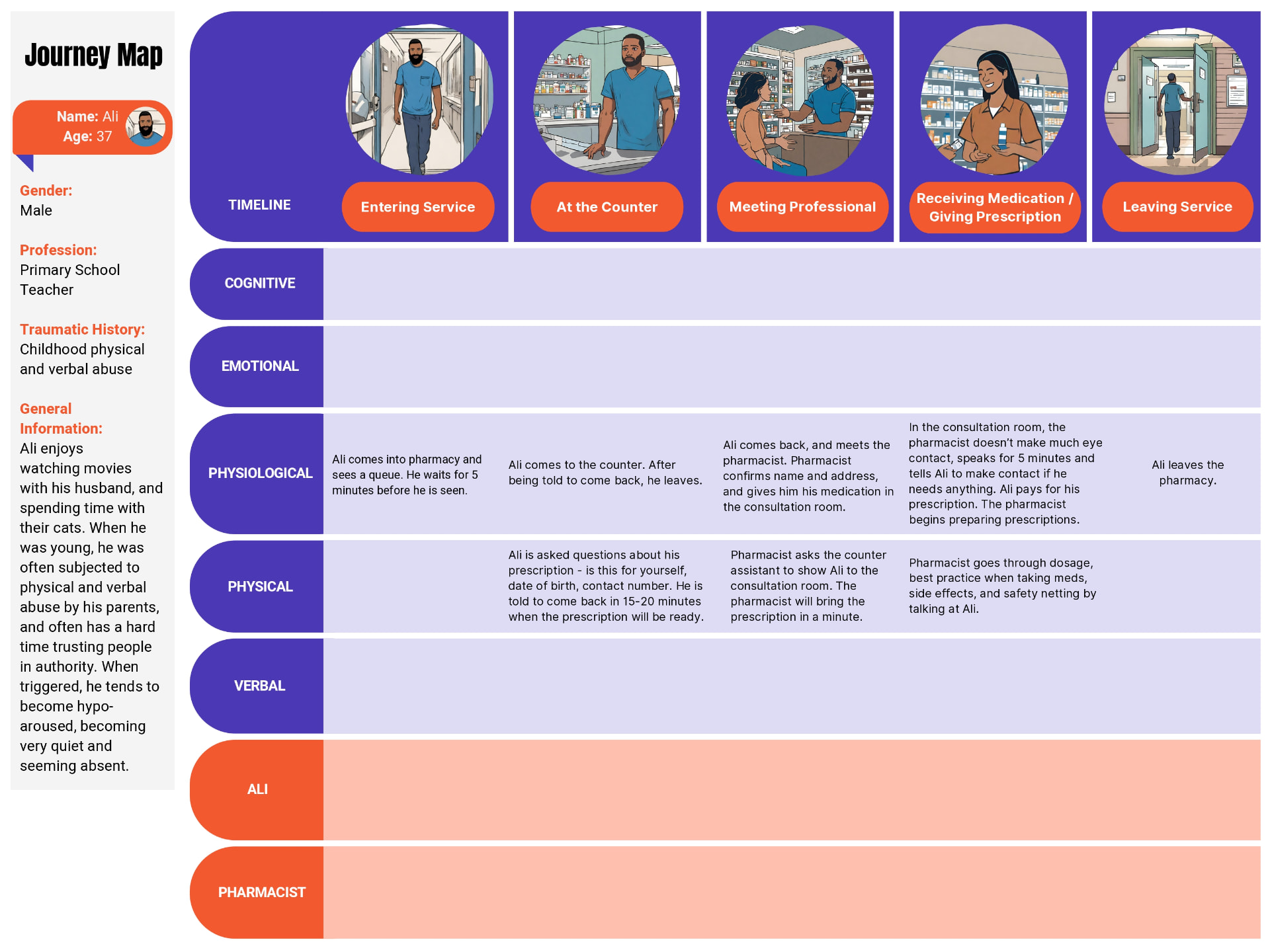
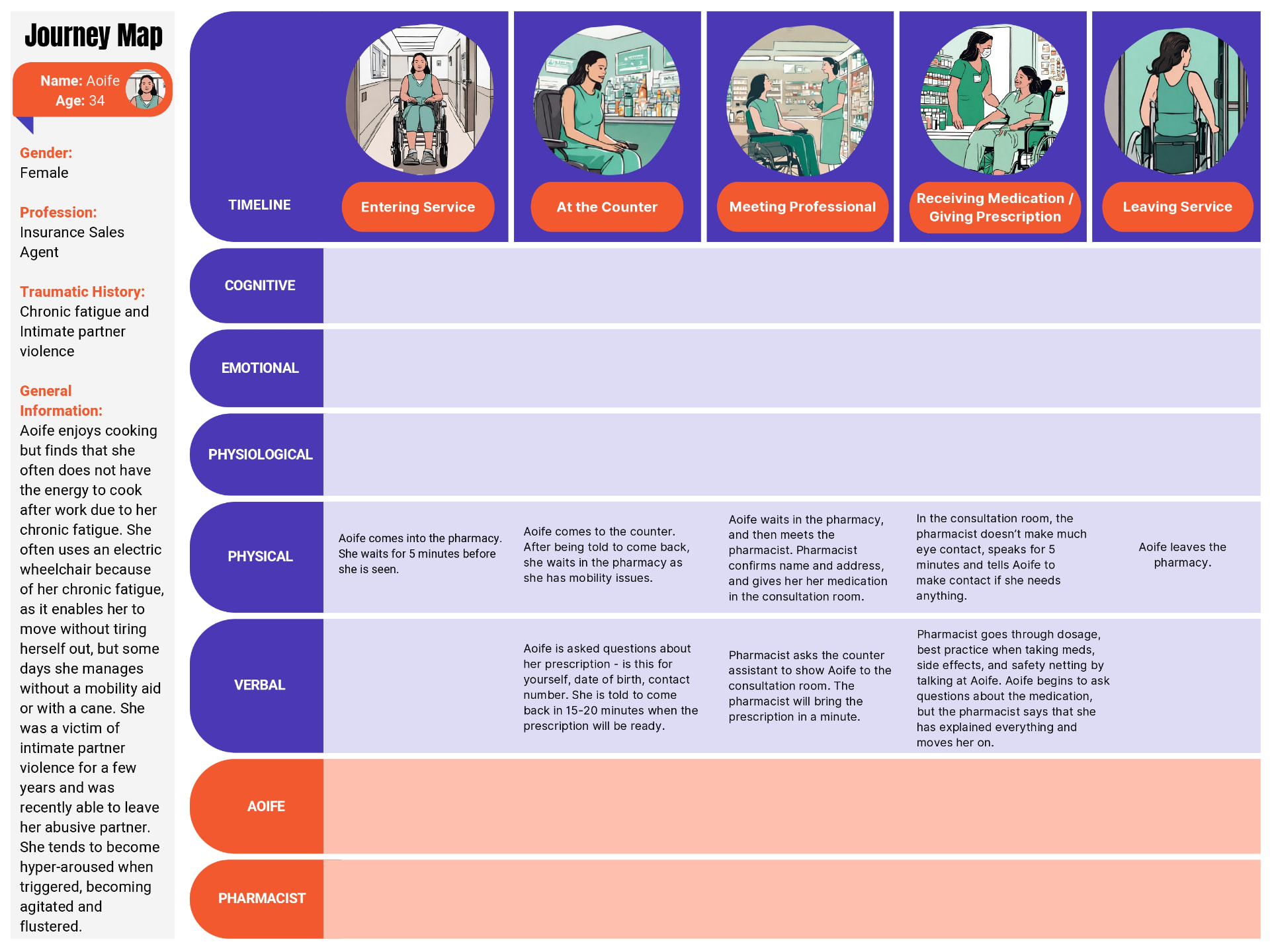
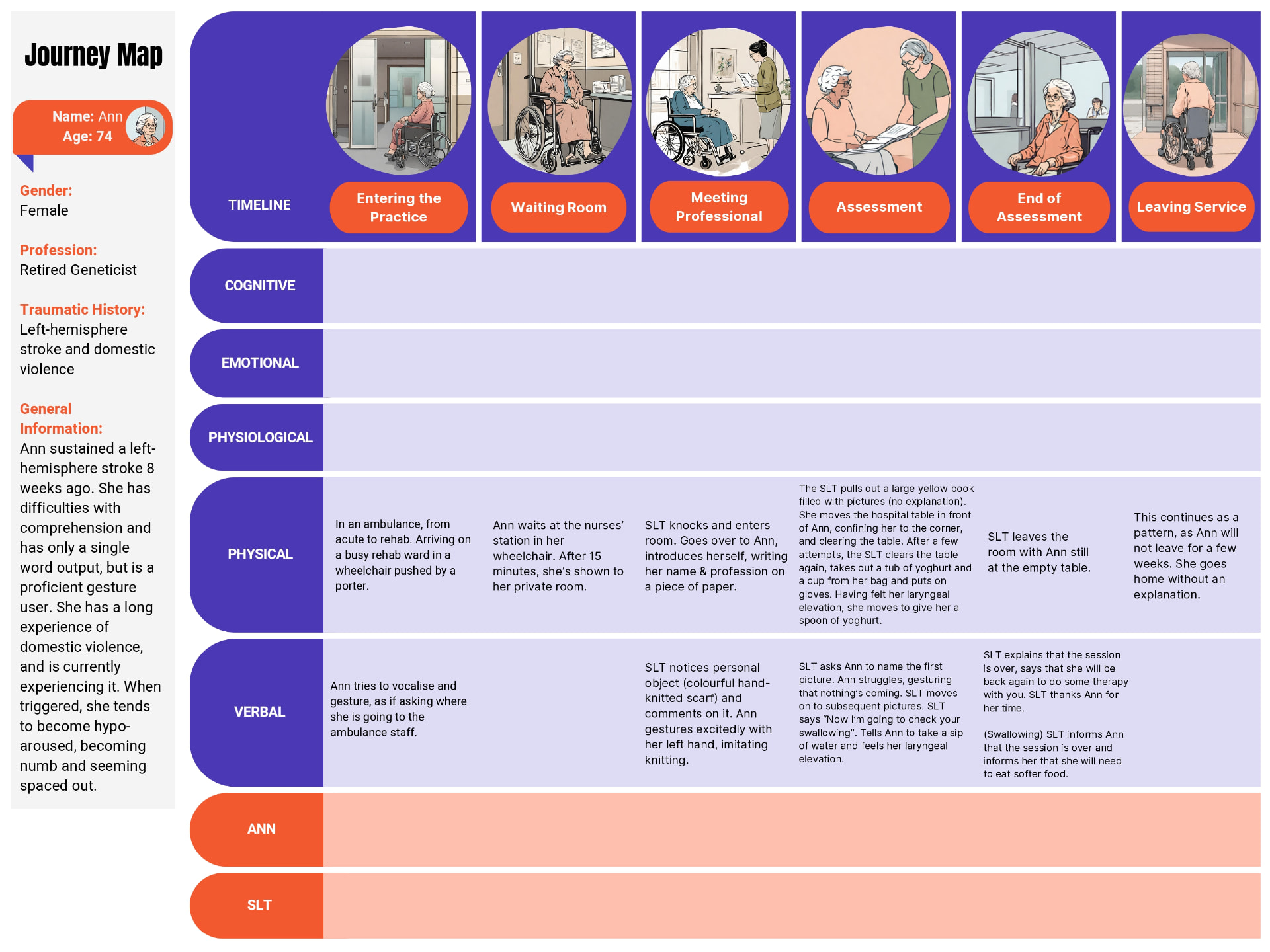
A second output was a set of teaching aids and tools, including the TICTAC Toolkit and journey map templates. These were developed to mainstream trauma-informed care in healthcare education and to support discussion, reflection and application across learners and educators.
Impact
More than a research project.
The final design helped position TS4TIC as more than a research project. It became a practical, open-access resource for hospitals, educators and quality improvement teams interested in trauma-informed care.
Because the toolkit was designed for acute and community healthcare organisations of different sizes, it could travel beyond St James' Hospital while remaining grounded in the realities of Irish acute care. It also supported the project's wider aim of improving patient experience and quality improvement across the system, not just in one ward or department.
Reflection
Making a difficult conversation easier to access, teach and use.
This project strengthened my understanding of how design can support the Irish health system at both a practical and cultural level. The work had to speak to busy acute-care teams, to educators, to people with lived experience and to system-level stakeholders at the same time.
What made it meaningful was not only the content, but the way the content was shaped. By turning a complex trauma-informed care model into a clear visual toolkit, I helped make a difficult but important conversation easier to access, easier to teach and easier to use in real clinical settings.
Previous case study
← Kangaroo Lounge Ecosystem