Case study 02
Innovation Self-Assessment Tool - measuring how an organisation strengthens its innovation capacity.
A lightweight MEL instrument designed for WHO's LEAD Innovation Challenge–helping staff, teams and the programme itself see how innovation capability grows over time.
- Role
- Innovation Strategist · MEL Specialist · Service Design & Agile Project Management
- Timeline
- 2024 - 2025
- Client
- World Health Organization
- Team
- WHO Innovation Hub · Department of Digital Health & Innovation (now called Department of Data, Digital Health, Analytics & AI)
At a glance
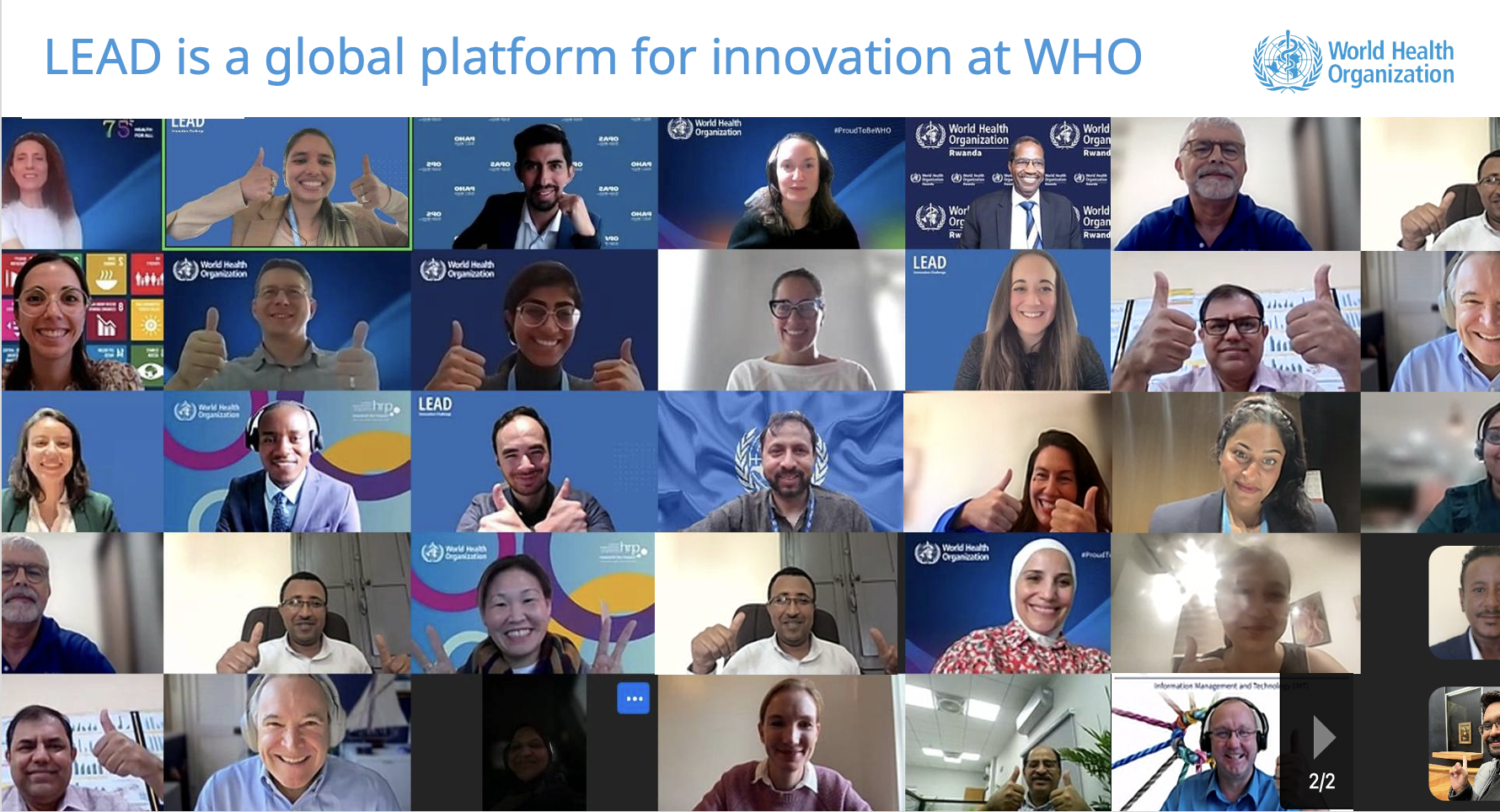
WHO's LEAD Innovation Challenge is a global flagship intrapreneurship programme, designed to help staff develop bold, equity-driven solutions to public health challenges. As the programme evolved, one question became central: was LEAD only generating ideas, or was it also building innovation capability across WHO's workforce?
I designed the Innovation Self-Assessment Tool (ISA) to answer that question. The ISA became a lightweight MEL output that enabled participants to reflect on their own innovation strengths and growth areas, while giving the programme a practical way to track progress, identify capability gaps and report on change over time.
Context
LEAD: Leap, Engage, Accelerate, Disrupt.
Launched in 2021 as WHO's internal innovation challenge, LEAD gives staff a structured but creative environment to co-develop innovations that support public health goals and strengthen a more adaptive organisational culture.
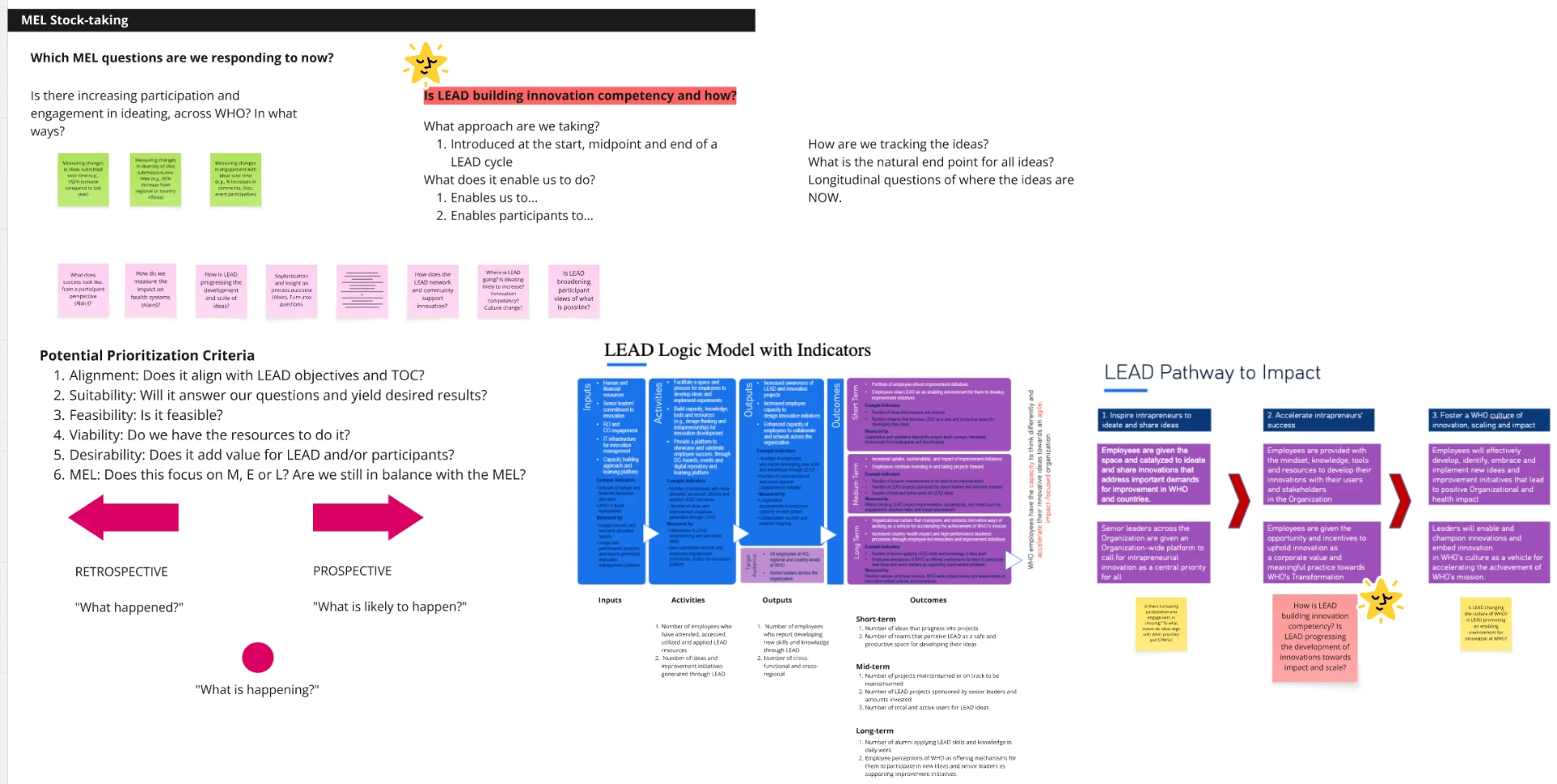
As LEAD matured, the measurement challenge became clearer. WHO already valued innovation as part of the Transformation Agenda, but it still needed a practical mechanism to show whether participation in LEAD was strengthening workforce capability, not just incubating ideas.
The programme moves through three phases
Ideate
Open call for ideas from the WHO workforce.
Validate
Bootcamp-style incubation for finalist teams to prototype (low-fi) and pitch for funding.
Experiment
Seed funding to build and test functional prototypes in real-world settings.
Problem definition
How might we measure LEAD's impact on innovation capability in a way that is simple, credible and useful for both participant learning and programme reporting?
What I found
01
Innovation capability was hard to measure in WHO's context.
It needed to produce robust programme data while still feeling reflective and developmental, not a performance test.
02
The assessment had to be short enough to complete.
It needed to produce robust programme data while still feeling reflective and developmental, not a performance test.
03
The output had to work for both MEL and learning.
It needed to produce robust programme data while still feeling reflective and developmental, not a performance test.
04
Change had to be visible over time.
It needed to produce robust programme data while still feeling reflective and developmental, not a performance test.
How I approached it
Both a service design challenge and a MEL challenge.
Being an innovator myself, I wanted the reporting tool to feel useful to the people engaging with it, not just useful to the programme team.
Step 01
Desk research & synthesis
I reviewed existing innovation assessment tools and competency frameworks to understand what already existed, what was transferable, and what would not work in WHO's context.
Step 02
Framework mapping
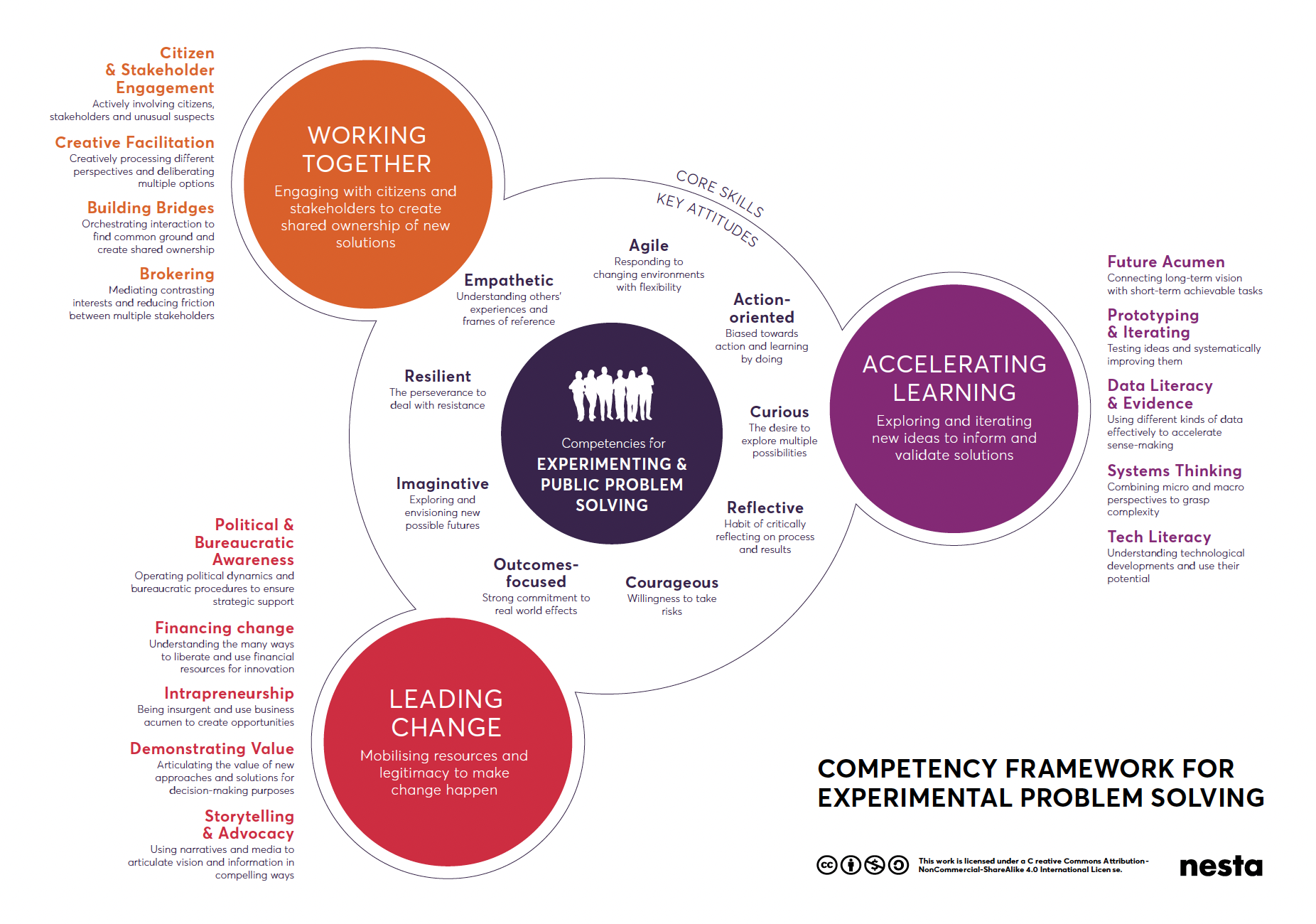
Nesta's Competency Framework for Experimental Problem Solving emerged as the strongest foundation. It focuses on practical innovation behaviours, attitudes, skills and tools rather than abstract innovation language – a conceptual logic relevant to LEAD's purpose and to the realities of public-sector innovation.
I mapped the framework against LEAD's objectives and programme logic, translating a strong external framework into a WHO-specific assessment model that could support both learning and reporting.
Step 03
Co-design & prototyping
I drafted the first version of the tool as a simple survey form, shaping the wording, sequencing and structure so it felt clear, useful and non-intimidating.
Design principles
Context-sensitive
Tailored to WHO's diverse workforce.
Time-efficient
Short enough to fit into existing programme moments.
Developmental
Useful for reflection, not just reporting.
Longitudinal
Repeatable across milestones to show change over time.
Actionable
Able to inform coaching, programme design and team composition.
The tool was tested with LEAD participants and refined through live use over virtual co-design sessions. I observed how participants responded, gathered feedback, and adjusted the instrument over time to reduce friction and improve clarity.
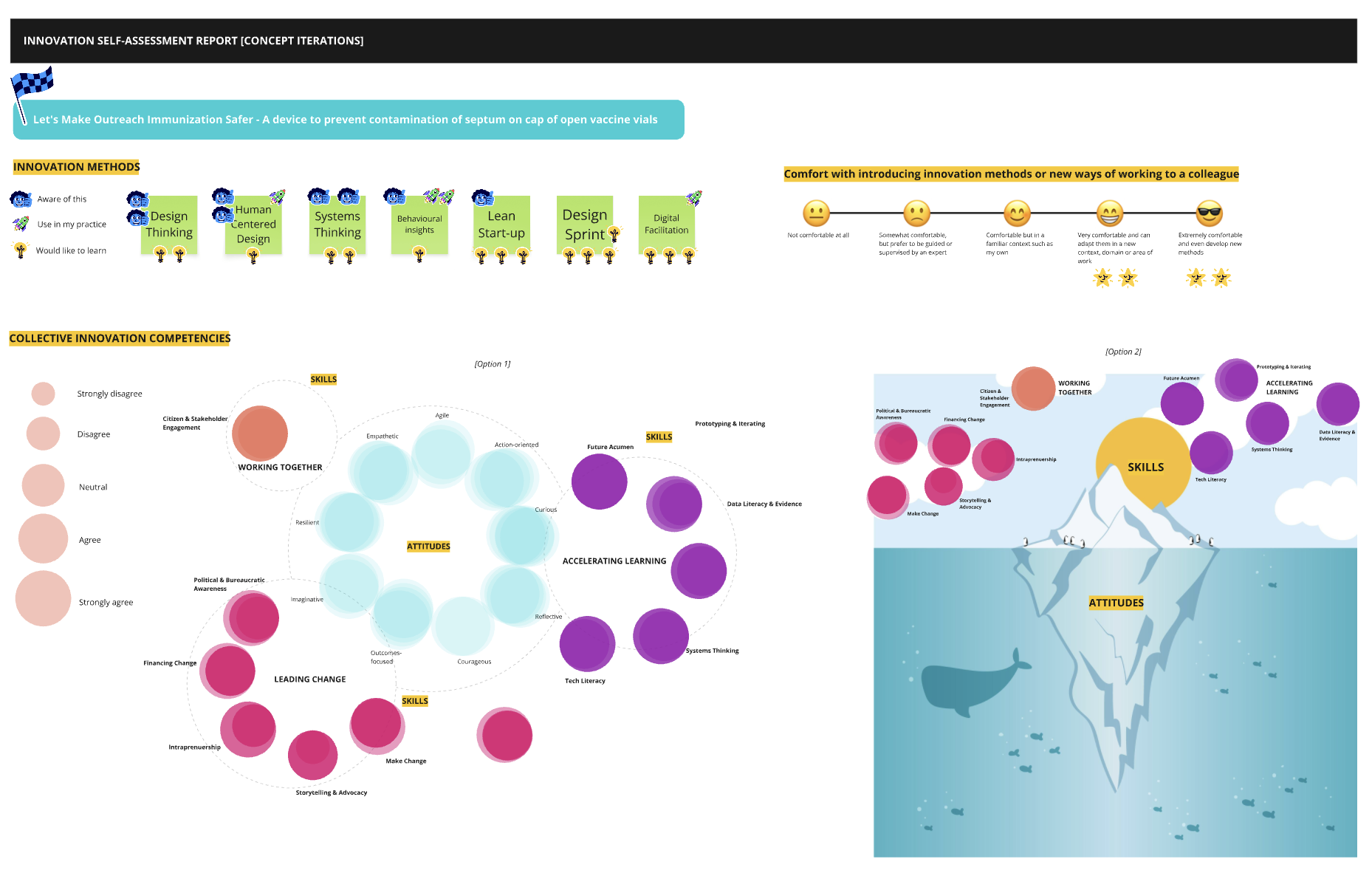
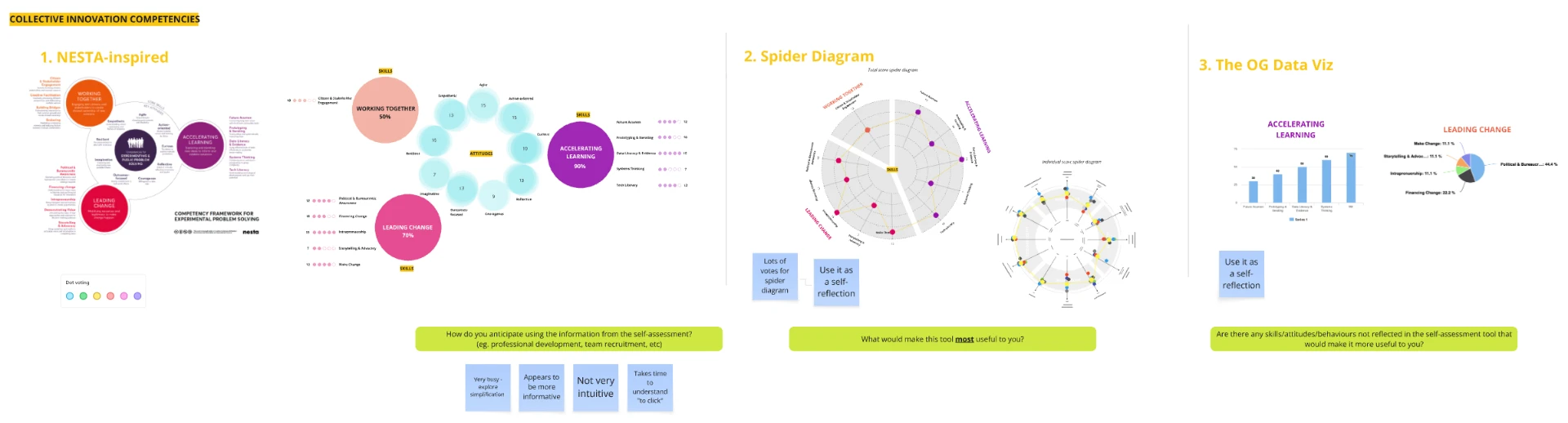
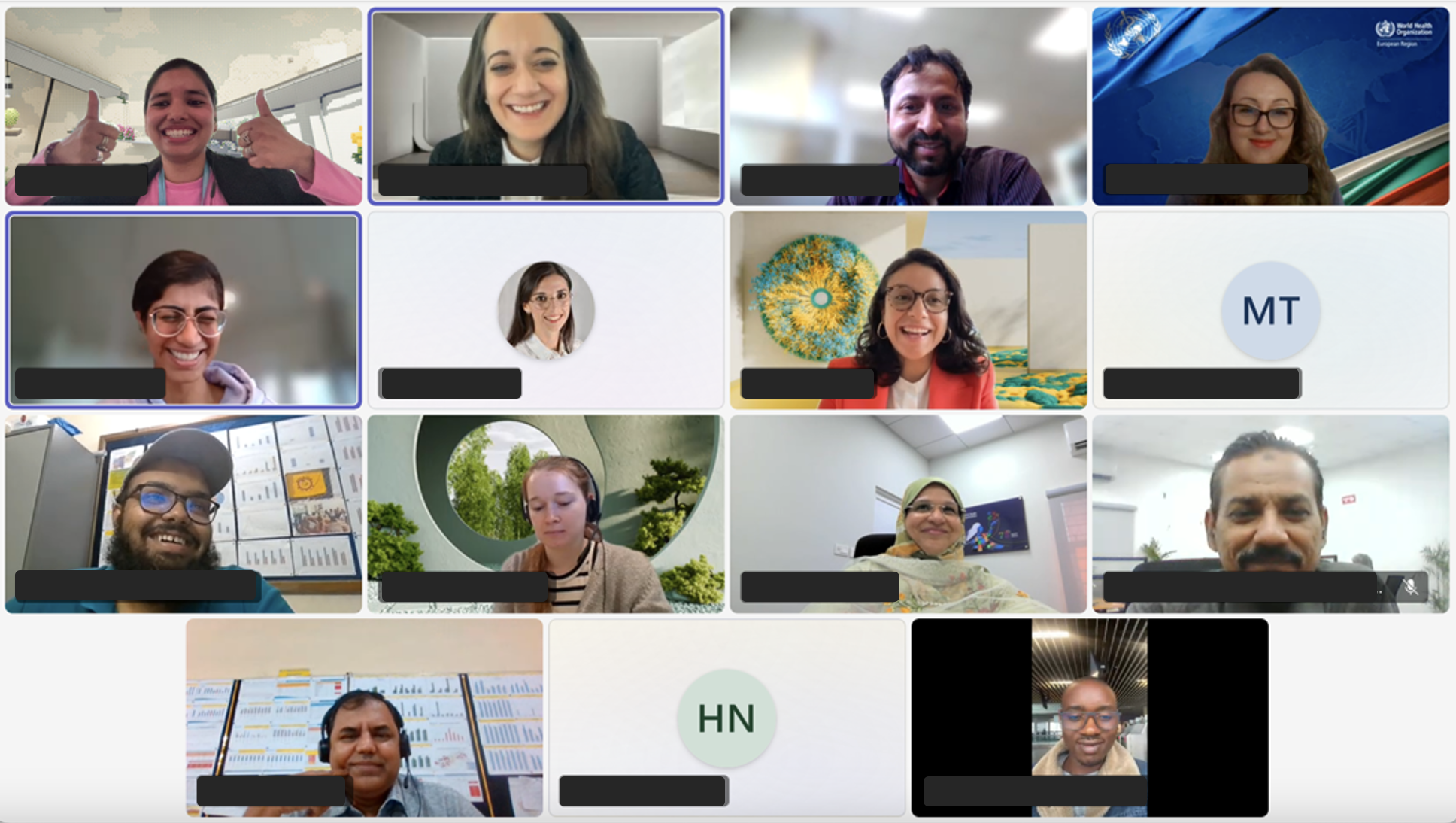
Concept iterations and user feedback on tool and reporting formats.
Step 04
Implementation & learning
The ISA was embedded into LEAD touchpoints so it could be used across the full programme cycle rather than as a one-off exercise.
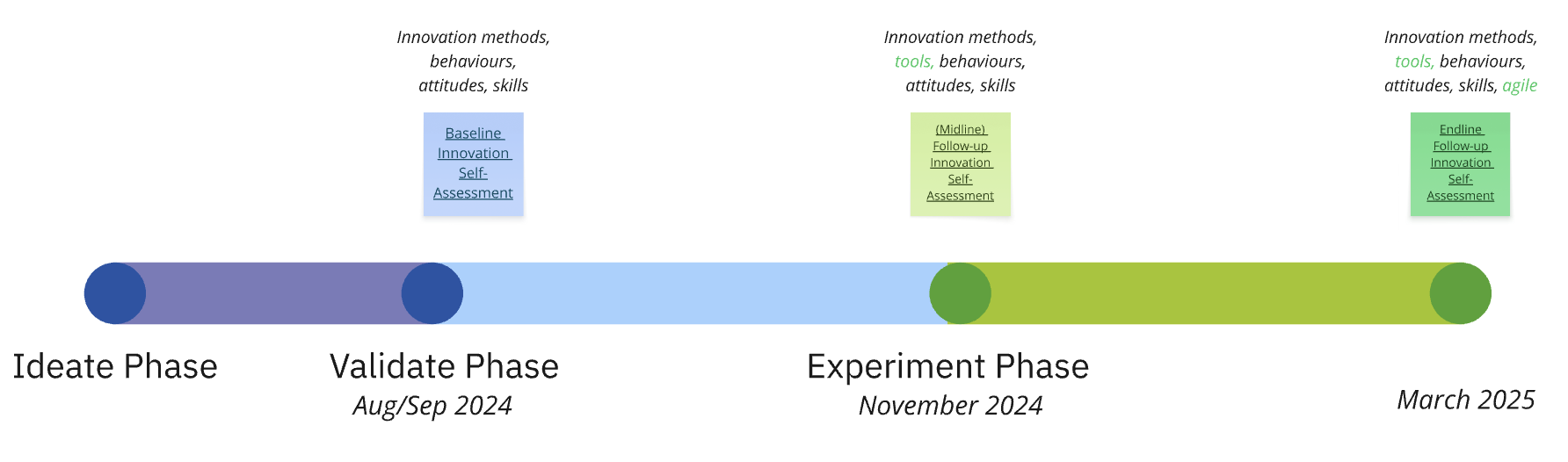
Timeline of evolved iterations deployed across LEAD touchpoints
I also conducted supplementary in-depth interviews (four virtual and one in-person) with all five teams from the 2024-25 Experiment Phase. These conversations helped deepen our understanding of participants' experiences of LEAD, and informed future iterations.
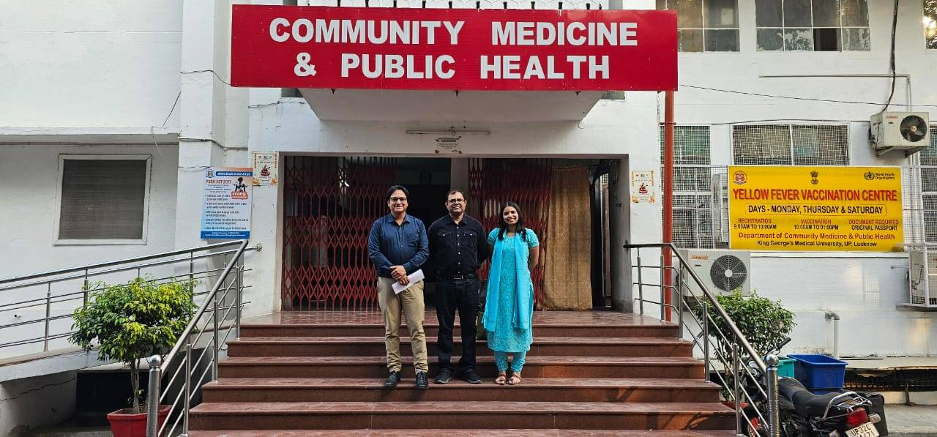
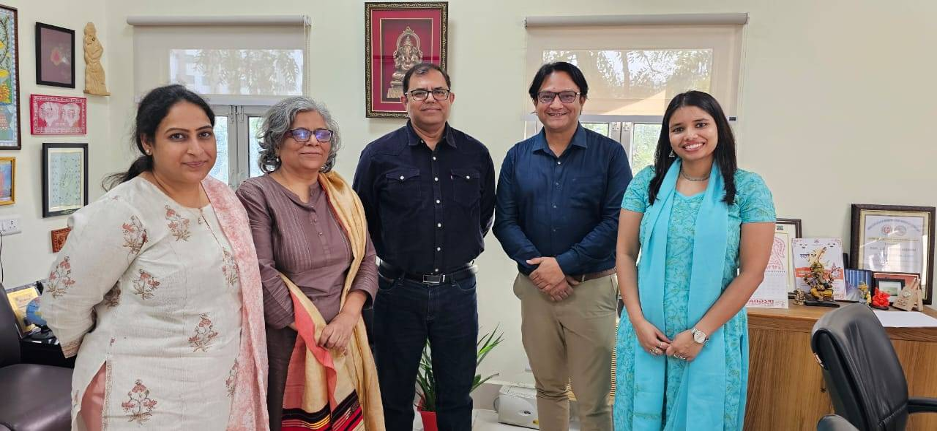
Meeting with SEARO team in India: Top 5 finalists of LEAD 2024-25 Experiment Phase.
The tool
ISA - a rapid but meaningful self-assessment.
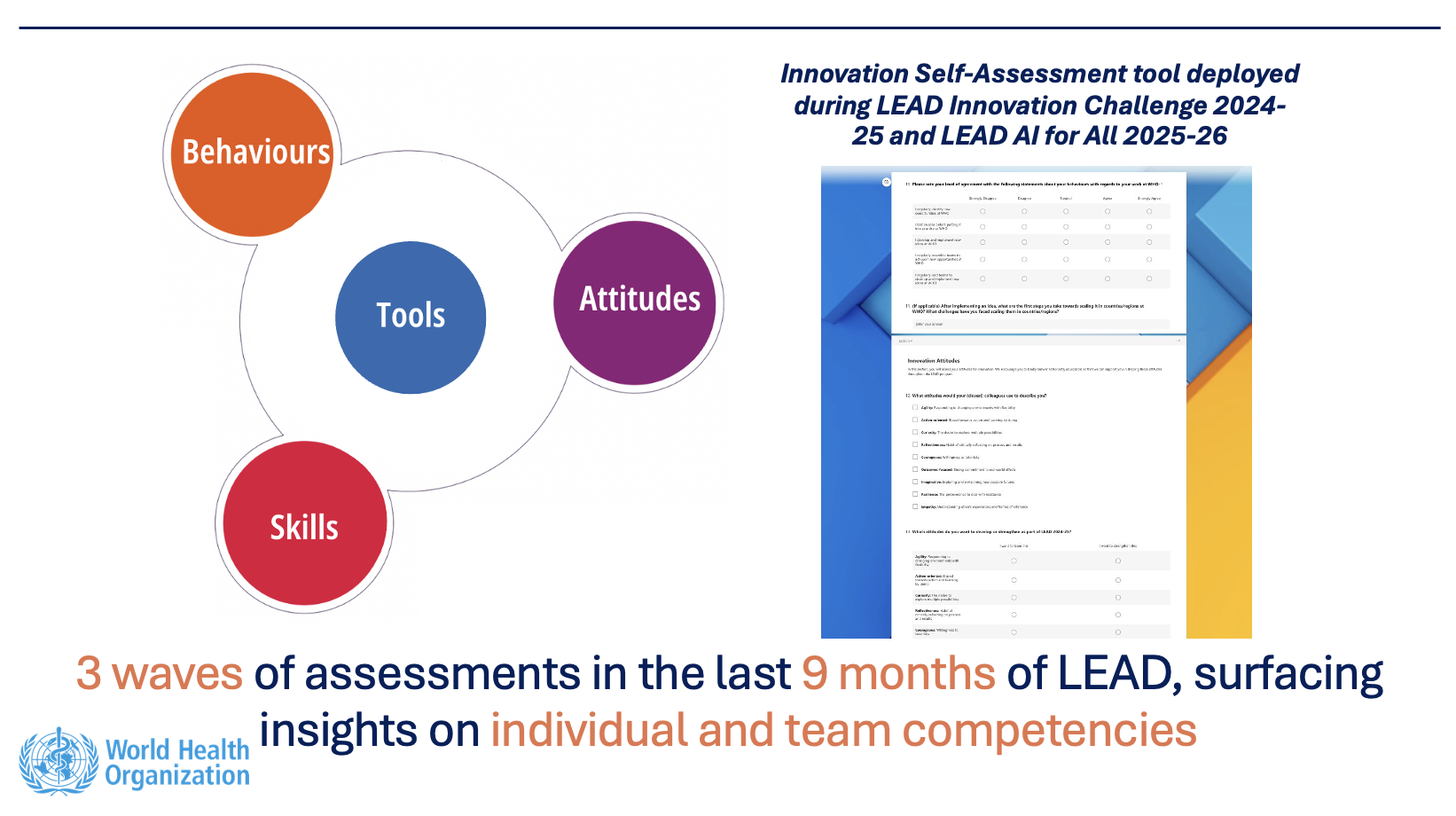
The Innovation Self-Assessment tool enabled WHO workforce to reflect on their innovation tools usage, behaviours, attitudes, skills and agile innovation management.
ISA's value was simple but powerful: it gave people a clear picture of where they were starting from, helped them track how their capabilities were changing, and gave the programme a practical measurement layer for impact reporting.
What I led
- —Framed the tool and its measurement logic
- —Translated the competency framework into a WHO-specific assessment
- —Shaped the tool so it worked both for reflection and reporting
- —Embedded the tool into programme milestones
- —Refined the tool through user feedback and live deployment
ISA 2.0
Refined for LEAD 2025-26: AI for All.
Drawing from agile innovation management principles, the evolved 2025 version built directly on concurrent learnings and iterative feedback gathered throughout the 2024-25 LEAD cycle. ISA was refined to reduce completion burden, strengthen the balance between quantitative and qualitative inputs, and add clearer prompts around innovation methods, tool maturity and agile working practices.
These UX improvements made the tool stronger as a full-cycle measurement instrument, showing how innovation capability evolved from early ideation through experimentation, reflection, and reporting.
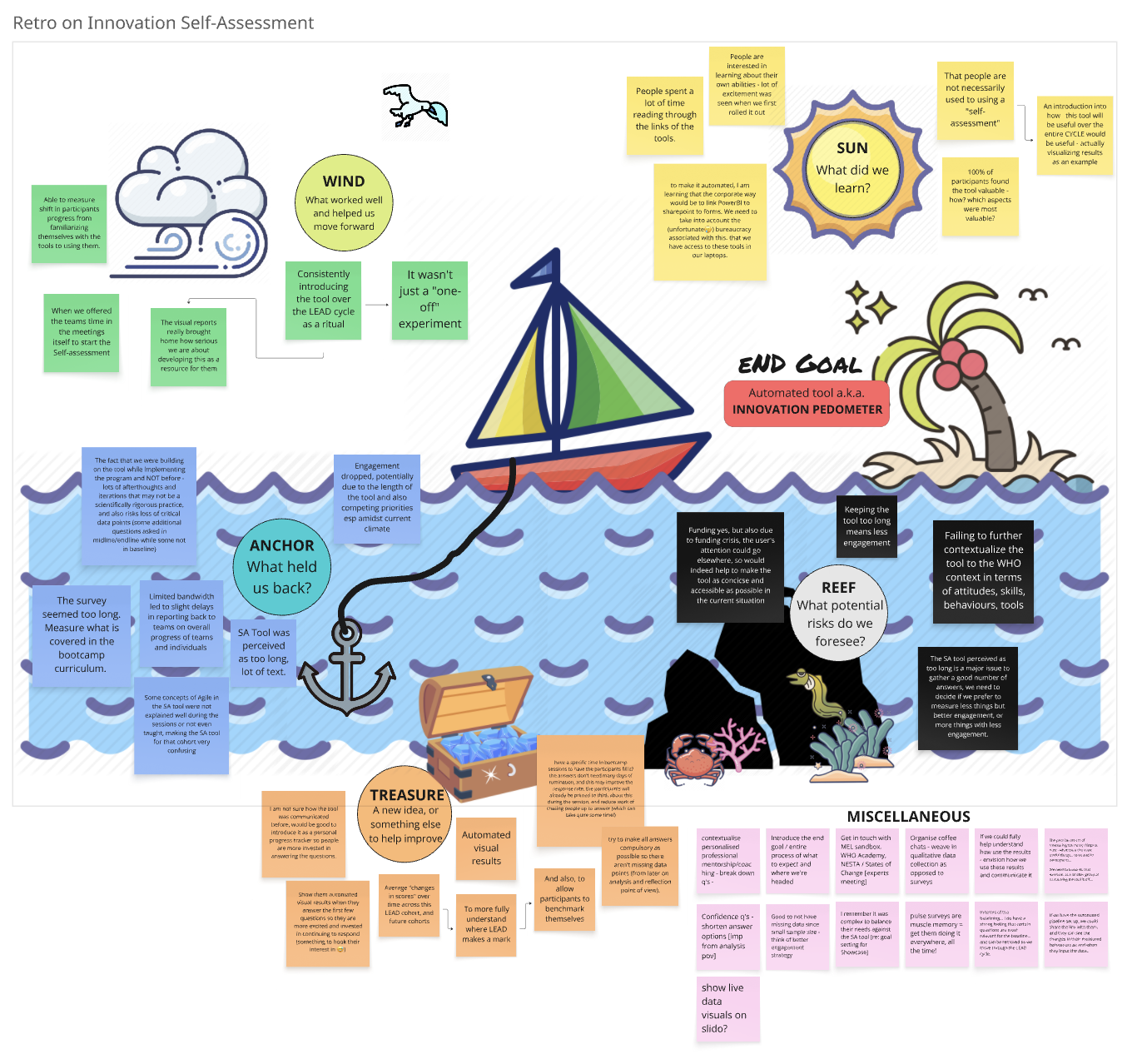
Using agile techniques such as project retrospectives to gather feedback on ISA for deployment in LEAD 2026: AI for All.
What changed
- ◆Shorter completion time
- ◆Clearer and more intuitive question flow
- ◆Stronger focus on innovation methods and tool maturity
- ◆Better balance between closed and open-ended responses
- ◆Improved fit for repeated use across programme touchpoints
Impact
Measuring growth, not just participation.
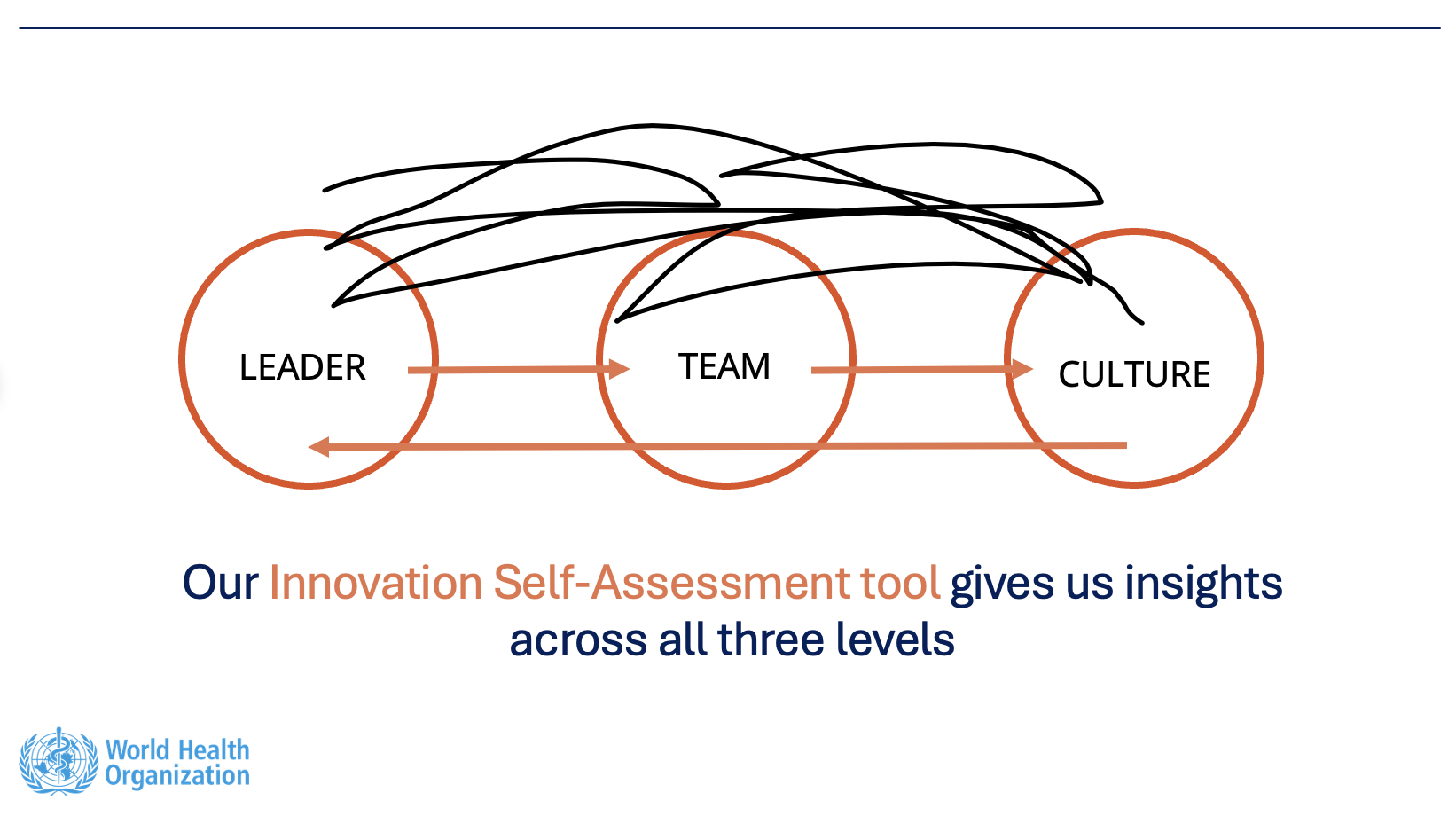
The ISA became one of the most useful MEL outputs in LEAD. It created value at three levels: participants, teams and the programme itself.
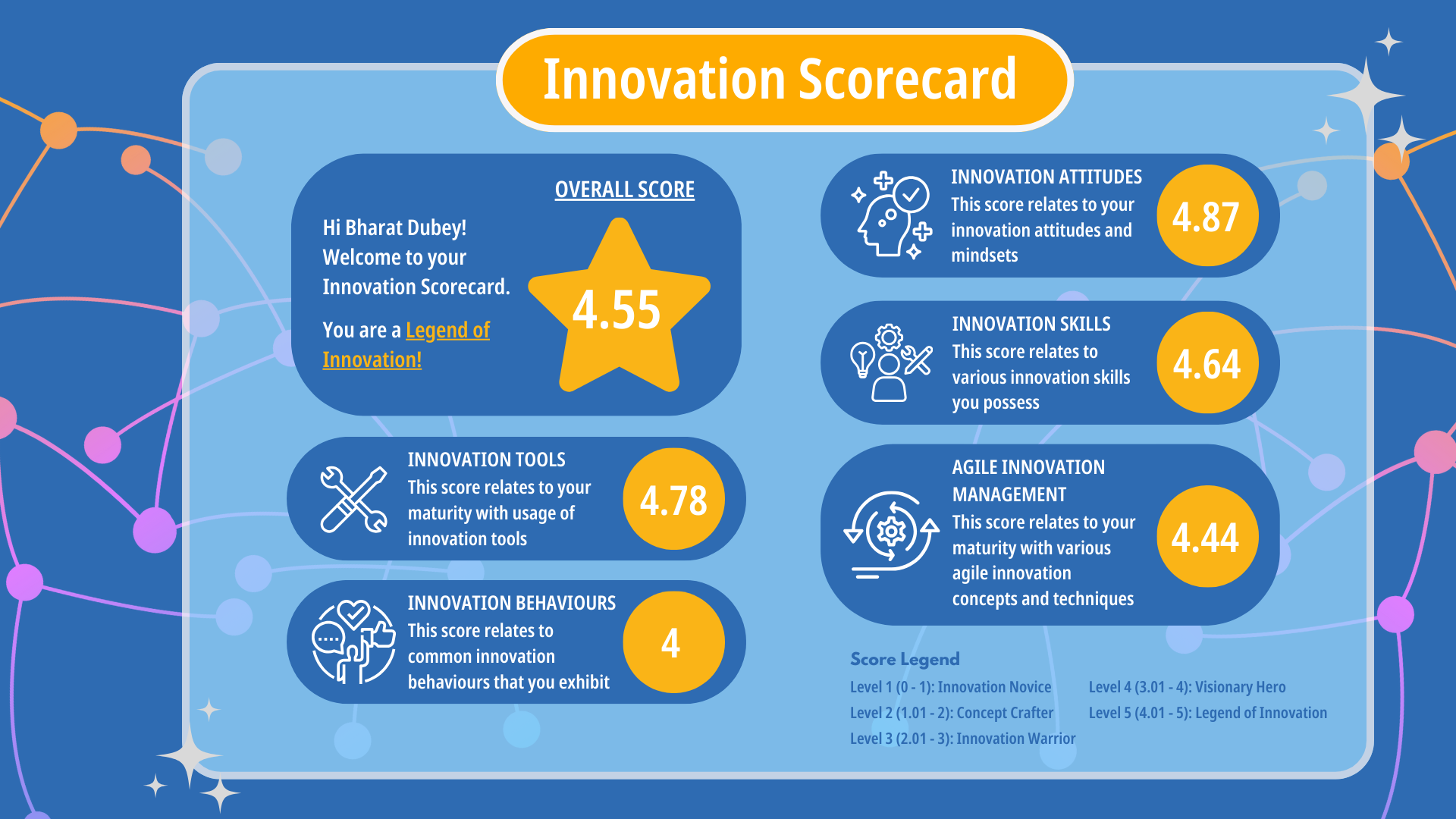
For participants
A reflective baseline and a way to track their own development as innovators.
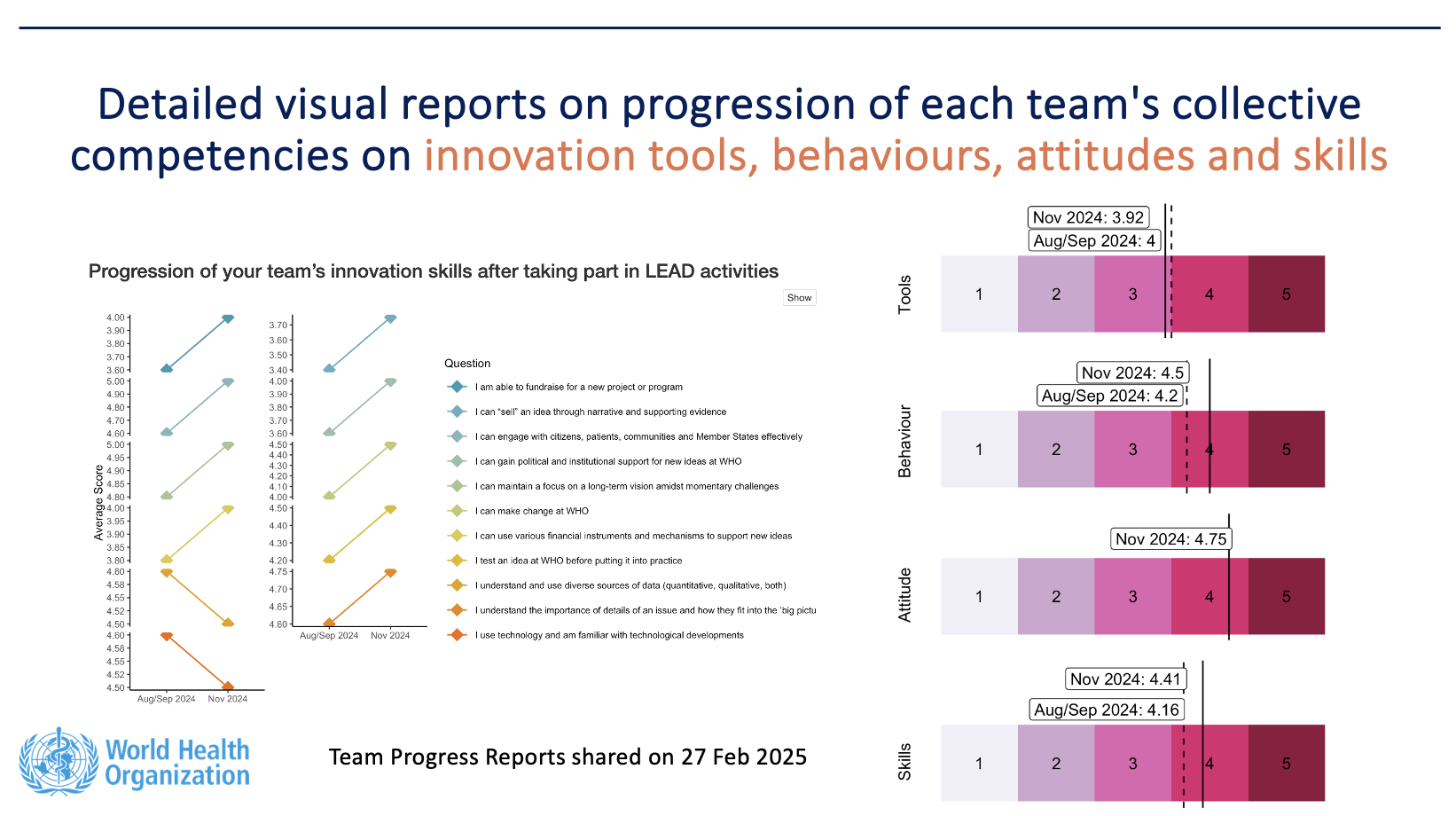
For teams
A shared view of collective strengths and gaps, supporting recruitment, role allocation and collaboration.
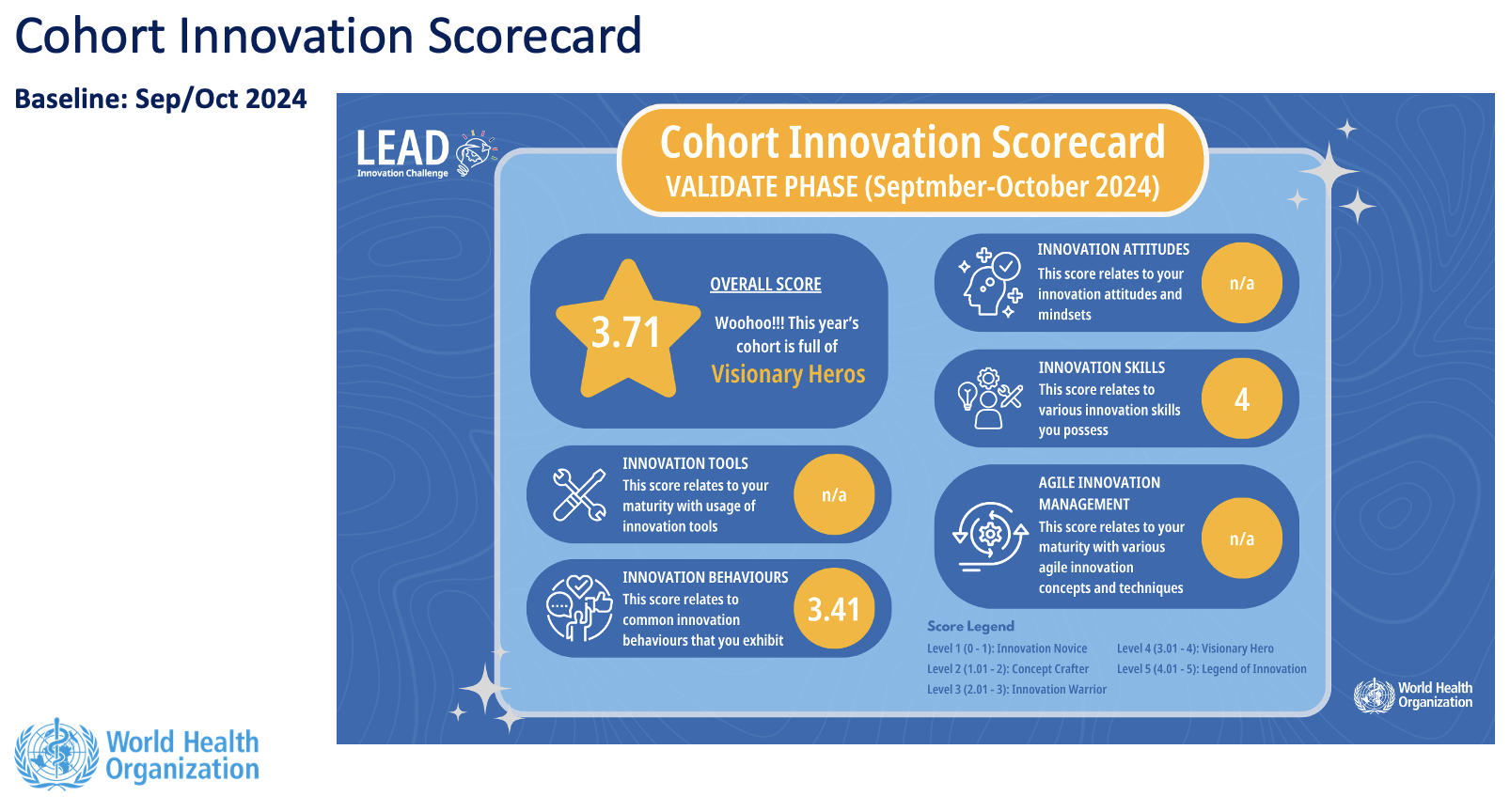
For the programme
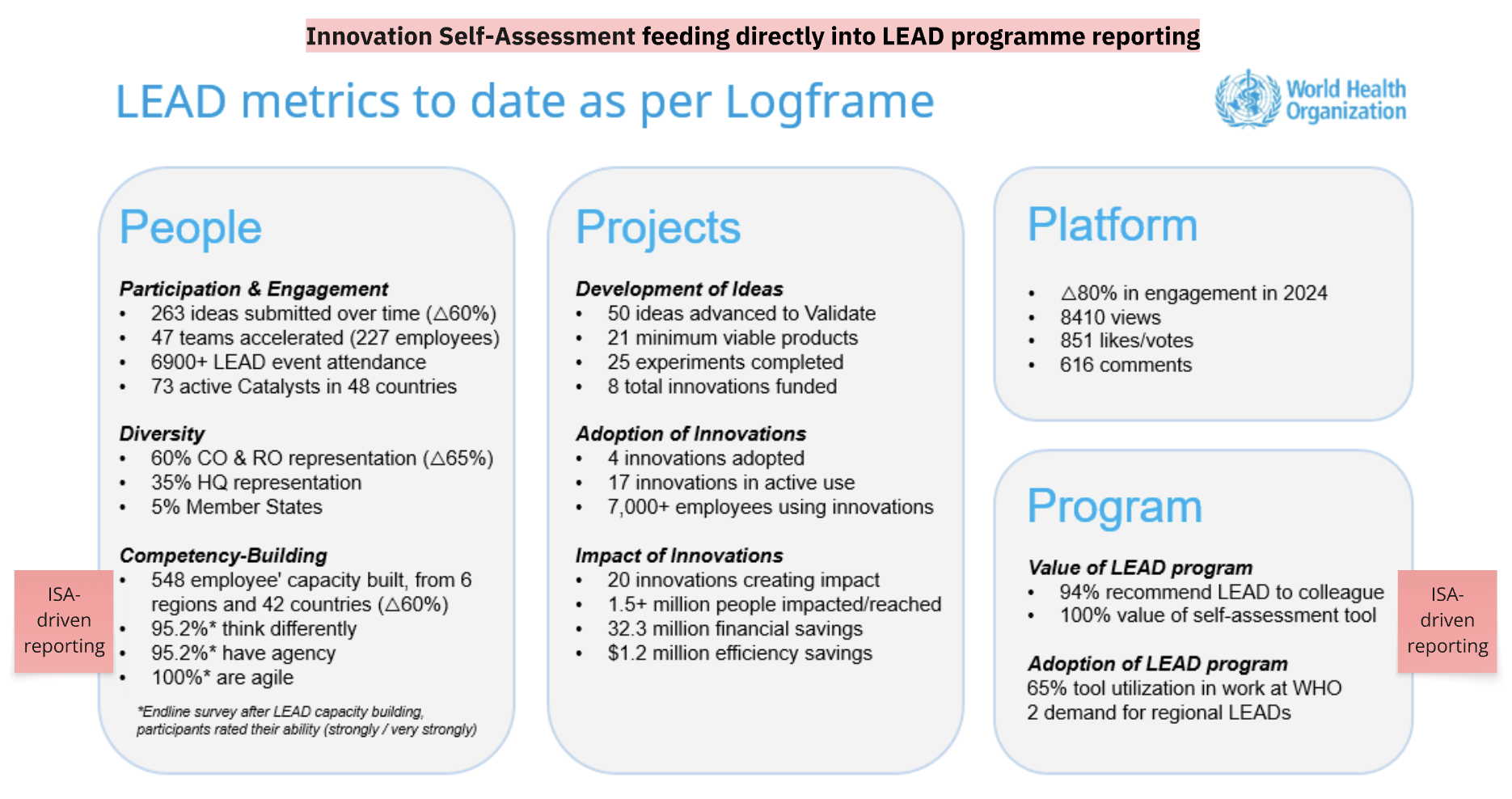
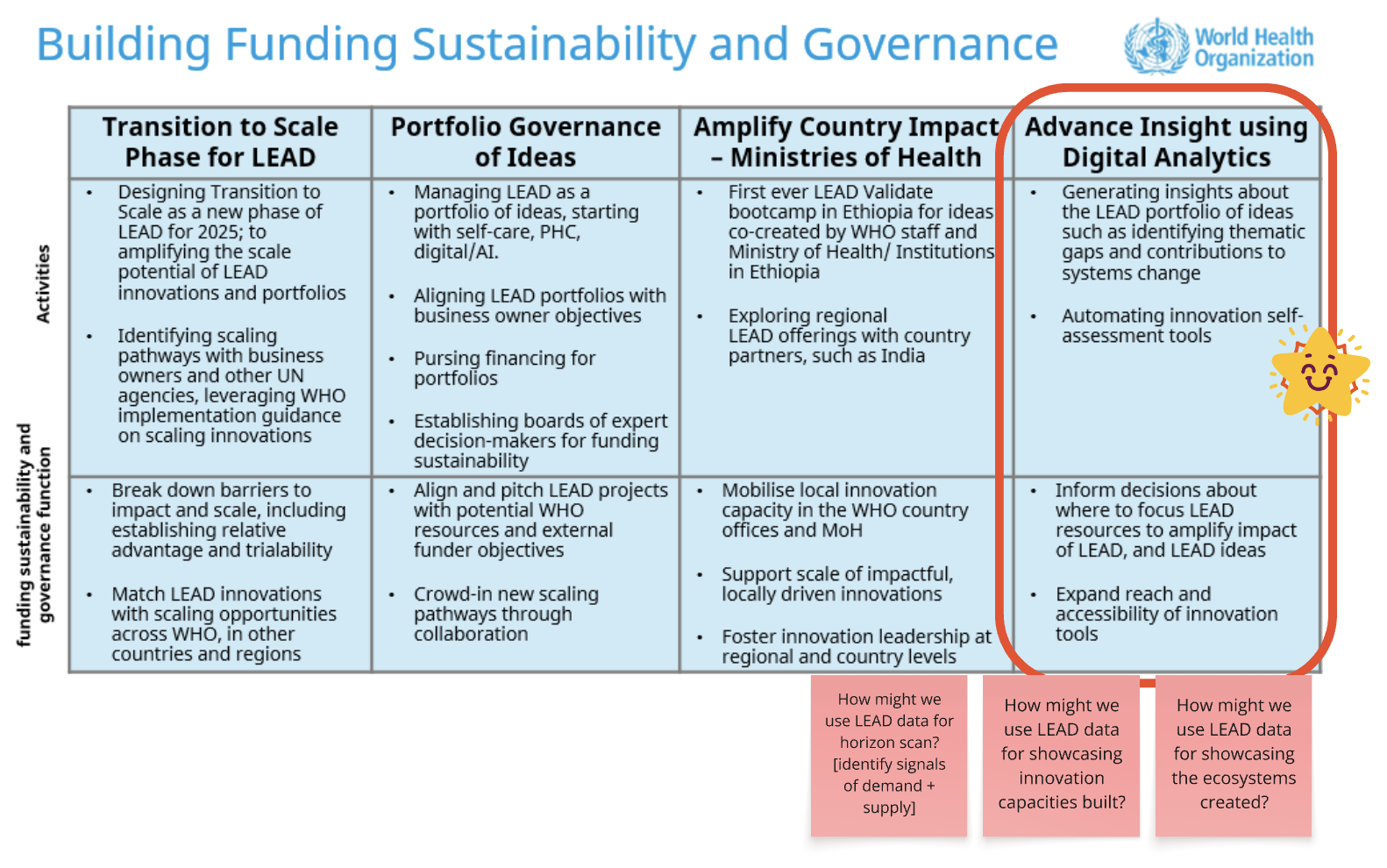
A structured way to generate cohort-level insights, compare progress across touchpoints and report on how innovation capability was changing over time.
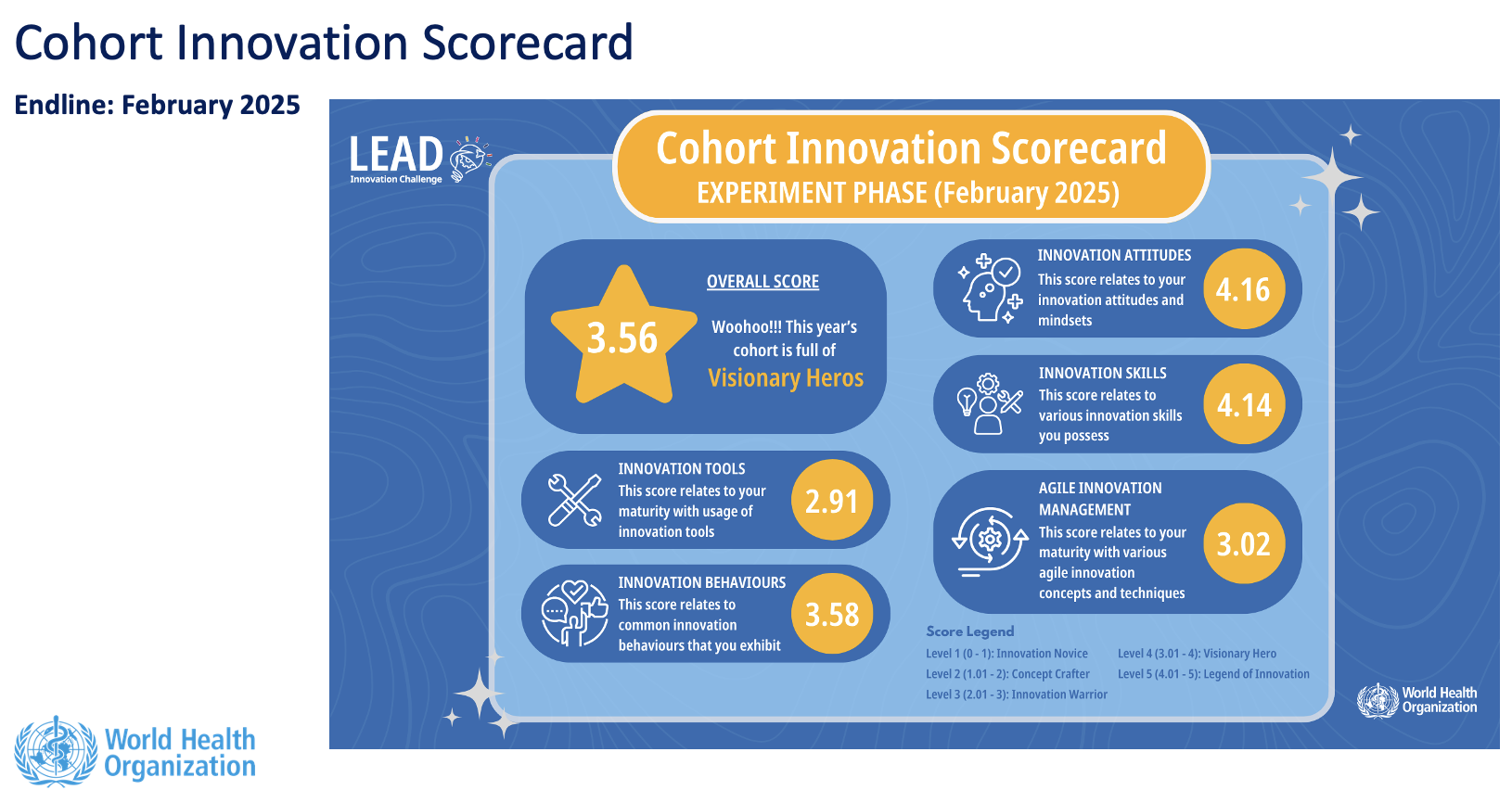
The most important shift was conceptual: the programme moved from asking, "How many ideas did we get?" to asking, "How is the organisation becoming better at innovation?"
Reflection
Impact tools only work when people actually want to use them.
The Innovation Self-Assessment worked because it was not designed as a heavy evaluation form. It was designed as a practical, reflective instrument that could support learning while also generating evidence.
For me, that is what strong MEL through service design looks like: a small tool with a big role in helping an organisation understand not only what it produced, but what it changed.
Previous case study
← Kangaroo Lounge Ecosystem